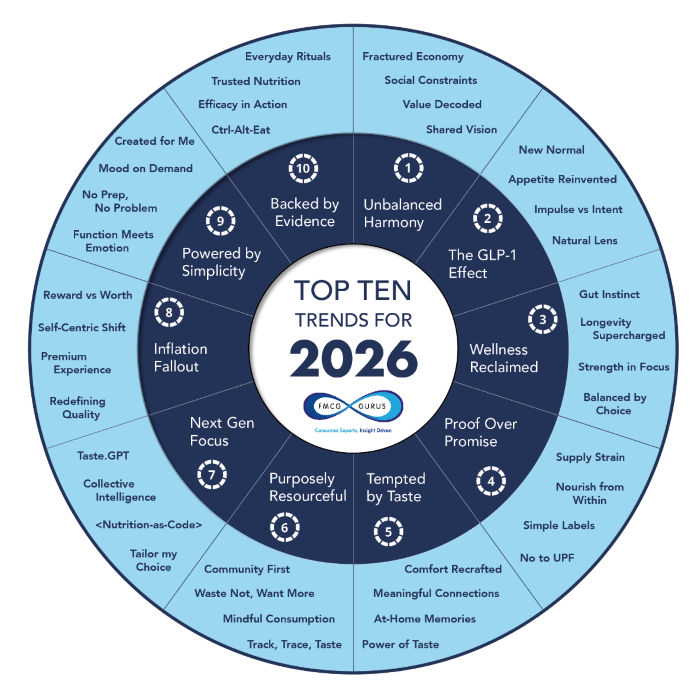
According to a new report from FMCG Gurus, global consumers feel they’re living through ongoing uncertainty, influencing daily choices and long-term plans. People want control over their emotional and physical well-being, yet rising barriers to healthy living, along with financial stress and global conflict, leave many feeling less in control. As a result, consumers are turning to small pleasures, meaningful relationships, and products that offer comfort, value, or escape. Meanwhile, growing distrust in information sources and concerns that society is ‘changing too fast’ are reshaping expectations across food, drink, and wellness. Our 2026 outlook highlights ten major global consumer trends, with the first five and their sub trends outlined here.
- Unbalanced Harmony (Sub trends: Fractured Economy | Social Constraints | Value Decoded | Shared Vision)
57% of global Generation Z consumers state that they sometimes feel the world is changing at too fast a rate.
People feel overwhelmed by rapid societal change, this is prevalent across all demographics, but especially Generation Z. Rising concerns about global conflict, personal finances, and shifting cultural norms are driving worries about the macroeconomy. This is pushing consumers toward trusted brands, familiar flavours, and products that remind them of simpler times. In 2026, nostalgia, comfort, and perceived authenticity will play a powerful role in purchasing decisions.
- The GLP-1 Effect (Sub trends: New Normal | Appetite Reinvented | Impulse vs Intent | Natural Lens)
69% of global consumers state that they would be interested in buying a food or beverage that stimulates GLP-1 hormones in a natural way.
The global conversation around weight loss has fundamentally shifted. With many consumers already using GLP-1 medication and nearly half wanting to lose weight, demand for effective, sustainable solutions are rising. However, perceptions of GLP-1 are polarised, from enthusiasm around rapid results to concerns over dependency, safety, and side effects. This will create two growth pathways for brands: products that naturally stimulate GLP-1, and nutrient-dense food and drink designed to support users during and after medication.
3.Wellness Reclaimed (Sub trends: Gut Instinct | Longevity Supercharged | Strength in Focus | Balanced by Choice)
45% of global consumers say they worry about their physical health, whilst 44% worry about their emotional health.
Consumers are increasingly aware that day-to-day habits directly impact longevity, yet many feel their physical and emotional health is suffering. Heart health, digestive wellness, sleep, and stress management are top concerns, with rising barriers such as financial cost, time scarcity, and stress making healthy living feel more difficult. In the next year, there is expected to be increased demand for simple, natural, affordable solutions that deliver noticeable results and for brands to help consumers regain balance rather than overwhelm them with complexity, which can test consumer trust.
4.Proof Over Promise (Sub trends: Supply Strain | Nourish from Within | Simple Labels | No to UPF)
58% of global consumers state that over the past year they have been more attentive to the ingredient lists on the food and drink products they buy.
As distrust grows, consumers are scrutinising how food is formulated, processed, and sourced. Concerns around ultra-processed foods, hidden ingredients, and supply chain strain continue to build. With many believing brands prioritise profit over people, authenticity and transparency are no longer optional. Companies that clearly communicate sourcing, processing, and sustainability, as well as real responsibility, will be best positioned to retain trust in an increasingly sceptical marketplace.
- Tempted by Taste (Sub trends: Comfort Recrafted | Meaningful Connections | At-Home Memories | Power of Taste)
Out of consumers who say they find traditional/nostalgic food flavours appealing, 51% say this is because they find these flavours indulgent.
According to the report, in a world defined by stress and financial caution, consumers are turning to small moments of indulgence for emotional relief and a sense of escapism. Traditional and nostalgic flavours are gaining popularity, with over half of consumers using snacks for comfort at least some of the time. As spending on foodservice declines, people are trading up on premium at-home treats that deliver restaurant-quality enjoyment at everyday prices. Taste matters, and indulgence must feel both rewarding and justified. For more visit fmcggurus.com/top-ten-trends-for-2026-trend-digest/