New data has revealed that food waste continues to erode margins and is one of the most costly, yet hidden, challenges in the global retail supply chain.
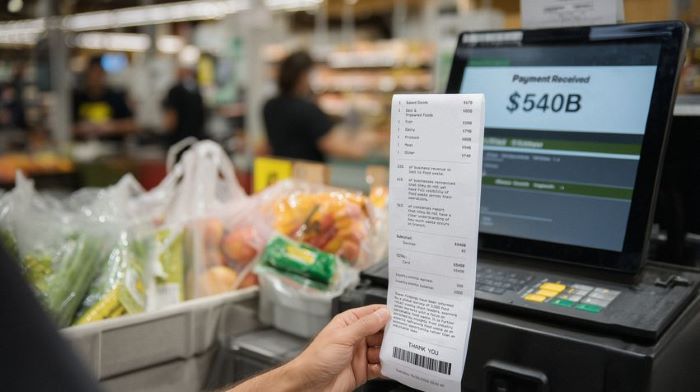
According to a new report, ‘Making the Invisible Visible: Unlocking the Hidden Value of Food Waste to Drive Growth and Profitability’ published today by Avery Dennison, a global materials science and digital identification solutions company. Independent modelling warns that the economic cost of food waste across the global supply chain is forecast to reach $540 billion by 20261, up from $526 billion last year. report
The report findings also show that, on average, food waste costs are equivalent to 33% of total revenues in the food retail supply chain annually from post-farm up to the point-of-sale.
Extensive research involving 3,500 global food retailers and supply chain leaders reveals that, despite growing awareness, 61% of businesses say they still lack full visibility into where food waste occurs across their operations. Limited influence over the most waste-intensive areas of the supply chain is a common challenge, highlighting the urgent need for targeted innovation and cross-supply chain collaboration.
The data highlights how leaders are consistently challenged at various points throughout the supply chain and most specifically across perishables. When asked to identify the three most difficult categories for waste, half pointed to meat (50%), 45% cited produce, and 28% mentioned baked goods. Over half (51%) of business leaders said that inventory management and overstocking contribute significantly to food waste within their operations. Tackling this will require a combination of solutions, including item-level inventory visibility, demand forecasting and real-time shelf-life management.
Transit remains a connecting thread between the different perishable categories, with 56% of companies reporting that they do not have a clear understanding of how much food waste happens when goods are being transported.
If current trends continue, the cumulative cost of food waste from 2025 to 2030 is expected to reach $3.4 trillion2, coinciding with the 2030 deadline for the UN’s Sustainable Development Goal 12.3, which aims to halve global food waste3. Despite this goal, the report uncovered that over a quarter (27%) of leaders said that they would not meet the 2030 deadline.
Said Julie Vargas, VP/GM, Enterprise Intelligent Labels Growth at Avery Dennison: “Food waste has become an accepted cost of doing business, but it doesn’t have to be. Innovation exists today to help overcome the complexity of food waste by unlocking new possibilities and transforming a historic operating cost into measurable value across the global retail supply chain.
“The retail ecosystem is changing, but not enough retailers are changing with it. The biggest challenge is what we can’t see. From transit to shelf, blind spots are silently eroding margins. With the right innovation, we can turn this loss into measurable value and shift the conversation on food waste, from being purely seen as a sustainability issue, into a business critical one. This is about unlocking efficiency and growth across the entire supply chain.” For more or to download the report visit avydn.co/3MBKTOa