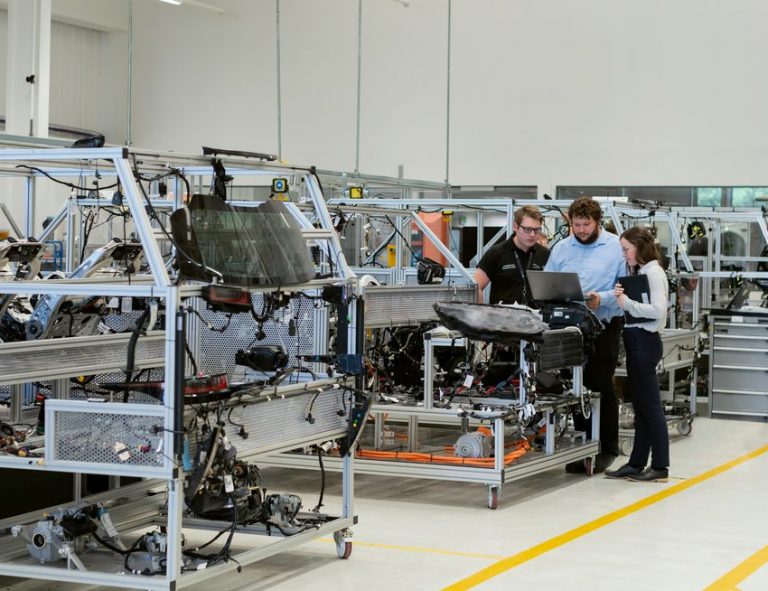

Smart manufacturing is no longer defined by robots and sensors, but by highly skilled teams of motivated and competent employees. According to Antoine Bisson, CEO of Poka, the top technology trends identified by Deloitte in its ‘Smart Manufacturing 2025’ study represent only the beginning of smarter operational processes. He explains that for manufacturers in the DACH region, it is no longer just about automating processes, but also about supporting their employees in these smarter environments. And he highlights how solutions for connected employees drive smart manufacturing projects forward and why they are a growth engine for manufacturing processes – and not a replacement for the human workforce.
According to Deloitte’s “Smart Manufacturing 2025” study, 85% of manufacturers are convinced that smart manufacturing initiatives will transform their factories into more productive, seamlessly functioning environments. The European smart manufacturing market is growing steadily. It is estimated to be worth US$69.87 billion in 2026 and is set to almost double to US$123.78 billion by 2031.
In 2025, Germany accounted for 23.75% of the European smart manufacturing market. However, whilst investment in technology is increasing, the challenges relating to the flexibility and resilience of the workforce in manufacturing plants are growing ever greater. How can manufacturers support their frontline staff as automation increases? This is where the connected worker becomes an indispensable factor in fully realising the potential of smart manufacturing projects.
We should not view the following four key areas from the Deloitte survey solely from the perspective of technology adoption. Rather, we must also consider them from the workers’ perspective, as they must become increasingly connected through technological progress in order for the benefits of the transformation to be realised:
Successful smart manufacturing requires human oversight
Building skills by engaging staff and closing the skills gap
The challenge of the last mile and the indispensable front line
Governance and operational monitoring boost agility
A supported, motivated workforce is the top priority for manufacturing companies.
By 2026, smart manufacturing will be indispensable for manufacturers seeking to modernise operations and maintain competitive advantage. However, as the Deloitte study shows, the path to synergies and operational success is not paved solely by automation or seamlessly integrated AI systems. Rather, it is paved by a skilled workforce that continuously drives processes forward on the front line.
Whether a manufacturer digitises its training, standardises its processes or integrates real-time data into its workflows, the ultimate goal remains the same: to create a culture of continuous improvement that is driven and implemented by the employees themselves.
Success in the next wave of smart manufacturing does not depend on autonomous production, but on connected teams.
Photo: Deloitte