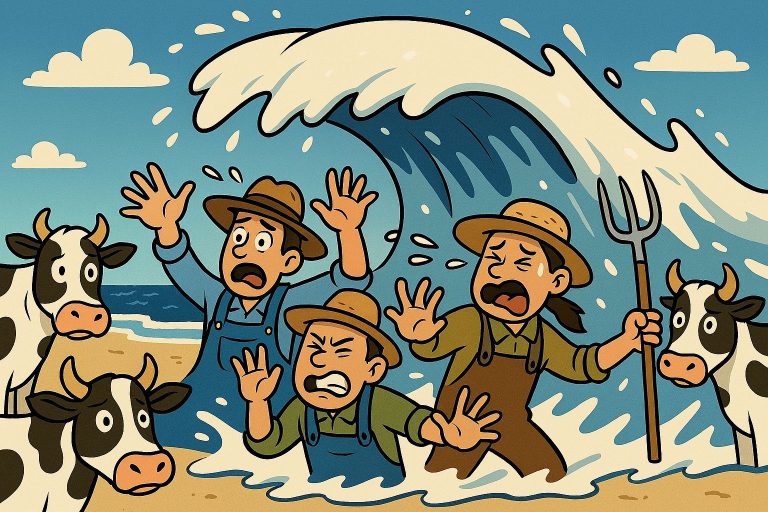
According to Jan de Keyser, Director of Agri & Food at BNP Paribas Fortis in Belgium, the question for 2026 is whether the milk tsunami will subside. There are signs that point to a possible levelling off. Political conditions are limiting the scope for further volume growth. Emission reduction targets and sectoral commitments mean that production can no longer increase indefinitely. In addition, lower milk prices will have an impact: postponed slaughterings, farm closures and reconsideration of investment plans will gradually translate into a more moderate supply.
On the demand side of the market, there are also cautious signs that the bottom may soon be reached. The first international auctions and quotations of the new year show slight signs of recovery. This suggests that the worst of the price correction may be behind the industry, even if the recovery remains fragile and heavily dependent on external factors such as exchange rates, trade measures and production developments in other export regions.
Nevertheless, it would be wrong to automatically assume that 2026 will be a calm and predictable year. The milk tsunami may be losing momentum, but the underlying structural tensions remain. The milk market will continue to be vulnerable to rapid changes in supply, demand and policy.
The bottom line is clear to de Keyser: the milk tsunami of 2025–2026 is not a temporary wave, but a wake-up call for the entire industry. Efficiency alone is no longer enough. The balance between production, market and value creation will be crucial. Those who understand this can use 2026 as a year of repositioning. Those who continue to focus solely on volume risk being caught off guard by the next wave.
Fig.: MS Copilot